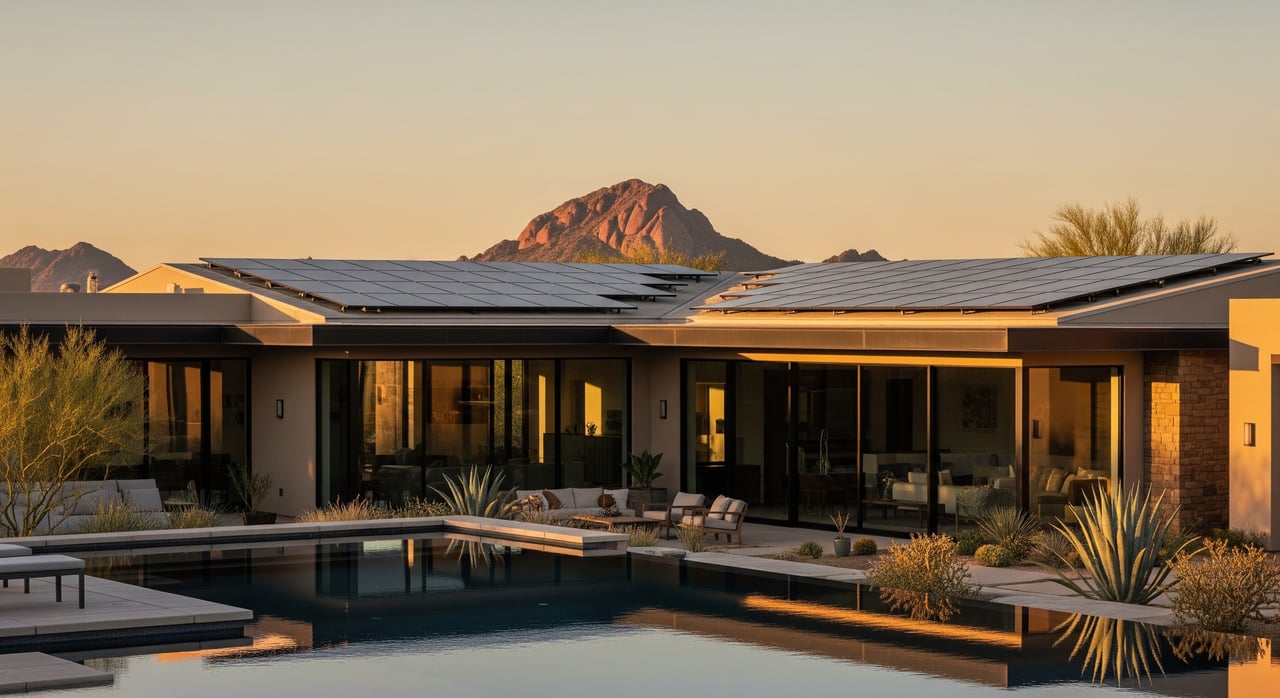
Thinking about a home with solar panels in Phoenix? You are not alone. Across the Valley, solar shows up on listings from starter homes to luxury estates, and it can be a smart move if you understand how ownership works. In this guide, you will learn the key differences between owned and leased systems, how they affect value and closing timelines, and the exact documents to request so you can buy or sell with confidence. Let’s dive in.
Phoenix solar basics you should know
Phoenix gets abundant sunshine, so rooftop systems often produce strong annual output. That can translate to bill savings, but the value depends on your utility and rate plan. Many homes in Maricopa County are served by APS or SRP, and each uses different rate designs and export rules.
- Start by confirming your service provider and rate plan. Check current programs and policies directly with APS or SRP. Rules can change, so verify details for your exact service address.
- For broader policy context, you can review decisions and filings at the Arizona Corporation Commission.
How utility rules shape savings
Export credits, time-of-use pricing, and demand charges can change the economics of solar. The same array can have different payback depending on whether the meter is under APS or SRP and which rate the home uses. Ask for 12 months of production and utility bills so you can compare real data to the current rate schedule.
Incentives at a glance
If the system is owned, federal incentives may apply for eligible installations. Review the IRS guidance for the Residential Clean Energy Credit on the official IRS page. State-level incentives in Arizona are more limited than in some states, so also check local tax guidance for sales and property tax treatment.
Owned vs. leased solar explained
Solar shows up in two main forms on listings: owned and leased, sometimes called a PPA. Each has different responsibilities and closing steps.
Owned systems: what it means
With an owned system, the homeowner holds title to the equipment. Ownership can be free and clear or financed through a loan, HELOC, or mortgage. Owners receive the full value of the energy produced and may qualify for federal tax credits when they install the system. Owners are also responsible for maintenance and any out-of-warranty repairs.
Key implications:
- You keep energy savings and any eligible tax benefits tied to installation.
- A loan or HELOC may create a lien that must be paid off or addressed at closing.
- You handle maintenance, including inverter replacement when needed.
Leased or PPA systems: what it means
Under a lease or PPA, a third party owns the equipment. You pay a fixed lease payment or a price per kWh. The third party receives the tax incentives attached to installation. At sale, many leases require the buyer to assume the contract or the seller to buy it out before closing.
Key implications:
- Lower upfront cost and third-party maintenance can be attractive to some buyers.
- The lease is a contractual obligation that can narrow the buyer pool if assumption terms are unclear.
- Transfers can add time to the transaction while the servicer processes paperwork.
How solar affects home value in Phoenix
Research shows that owned systems can add value, though the amount varies by system size, age, documentation, and local electricity rates. For a deeper look at market evidence and methodologies, see the Lawrence Berkeley National Laboratory’s Energy Markets and Policy group at LBNL. Clear production history and warranty coverage tend to support stronger outcomes.
Leased systems can be harder to value because the homeowner does not own the asset and the contract becomes an encumbrance. Appraisers and buyers may discount a lease if it must be assumed or if transfer terms are complex. Clear, written confirmation of transfer options and current buyout pricing helps reduce friction.
Buyer due-diligence: documents to request
If you are buying a Phoenix home with solar, verifying paperwork early protects your timeline and your budget. Ask the seller for these items.
If the system is owned
- Contract and invoice, including equipment list and installer information
- Finaled permits and inspection approvals from the city or county
- Interconnection agreement with the utility and any export or net-billing details
- At least 12 months of production data and the same period of utility bills
- Warranty documents for panels, inverters, batteries, and workmanship
- Financing payoff statement and lien release instructions, if applicable
- Any HOA approvals and service records
If the system is leased or under a PPA
- Full lease or PPA contract, plus amendments
- Written transfer policy, assumption requirements, and any fees
- Current buyout amount and how it is calculated
- Servicer contact information and transfer steps for closing
- Interconnection and monitoring access details, plus who handles service calls
Property, utility, and technical checks
- Title search to identify recorded liens or UCC filings related to solar
- Verify that permits were closed and the installed system matches approved plans through the City of Phoenix permitting portal or Maricopa County permits
- Confirm your utility and rate plan and compare production to expected output using the public NREL PVWatts estimator
- Bring your lender and title company into the loop early so they can review any liens or lease documents
- Confirm insurance coverage for the system, roof condition and age, inverter age and warranty, and battery ownership if present
Selling a Phoenix home with solar
When you sell, clear, early disclosure builds buyer confidence. State plainly whether the system is owned or leased in your listing and disclosures, and summarize recent production and average bills.
If the system is owned
- Paid off: Provide proof of ownership, permits, warranties, and production history.
- Financed: Request a written payoff quote and release instructions well before listing. Some lenders need lead time to prepare lien releases for closing.
- Tax credits: If you claimed the federal credit when the system was installed, that benefit does not transfer at sale. Advise both parties to consult tax guidance.
If the system is leased or a PPA
- Contact the servicer before you list to confirm transfer requirements and timing.
- Get the current buyout quote in writing, and clarify if partial buyout is allowed.
- Expect extra time for buyer approval and paperwork. Build that into your timeline and your purchase contract dates.
Buying a Phoenix home with solar
Go in with a plan and the right checks. The biggest wins come from confirming ownership status early, matching production to utility rates, and coordinating with your lender and title team.
- Verify whether the system is owned, financed, or leased. Ask for written proof.
- Obtain 12 months of production and bills, then compare to the current APS or SRP rate plan.
- If leased, read the entire contract and confirm any escalators, term length, and transfer fees.
- If financed, make sure lien payoff and release can happen before closing.
- Confirm roof and equipment age. Panels often last 25 years or more, while inverters may need replacement sooner.
Timeline tips for a smooth closing
A little upfront work can prevent last-minute surprises.
- Loop in lender and title as soon as you write or accept an offer.
- Order payoff letters or lease transfer packets right away.
- Verify permits and interconnection. If anything is unpermitted, address it before the appraisal.
- Share production data and utility bills with the appraiser to support value.
Local tools and resources
Use trusted public sources to verify key details and keep pace with policy changes.
- Utility rules and programs: APS and SRP
- State regulatory decisions: Arizona Corporation Commission
- Production estimates: NREL PVWatts
- Federal credits: IRS Residential Clean Energy Credit
- Market context and data: SEIA and LBNL Energy Markets & Policy
- Permitting and inspection: City of Phoenix and Maricopa County
Ready to evaluate a solar home in the West Valley or anywhere in Greater Phoenix? You deserve a clear plan, clean paperwork, and a smooth, on-time closing. For concierge guidance that keeps your goals first, reach out to the Desert Luxe Team. We will help you gather the right documents, coordinate with lender and title, and market or evaluate the home with confidence.
FAQs
What is the difference between owned and leased solar on a Phoenix home?
- Owned means you hold title to the equipment and receive the savings; leased or PPA means a third party owns it and you pay by lease or per kWh, often requiring contract assumption or buyout at sale.
How do APS and SRP rules affect my solar savings?
- Export credits, time-of-use rates, and demand charges differ by utility and plan, so request 12 months of production and bills and confirm current rules directly with APS or SRP for the service address.
Can I claim the federal solar tax credit if I buy a home with existing panels?
- The federal credit is tied to the original installation and eligibility; if the seller already claimed it, it does not transfer, so review current IRS guidance and consult a tax professional.
Do owned solar systems add resale value in Phoenix?
- Studies show owned systems can add value, but premiums vary by system size, age, utility rates, and documentation; clear production history and transferable warranties help.
What documents should I request when buying a solar home?
- Ask for permits, interconnection, 12 months of production and bills, warranties, ownership or lease paperwork, and any payoff or transfer instructions, plus roof and inverter age details.
How long can a solar lease transfer take during escrow?
- Timelines vary by servicer; plan for added time since the provider may need buyer approvals, utility information, and transfer fees before closing.