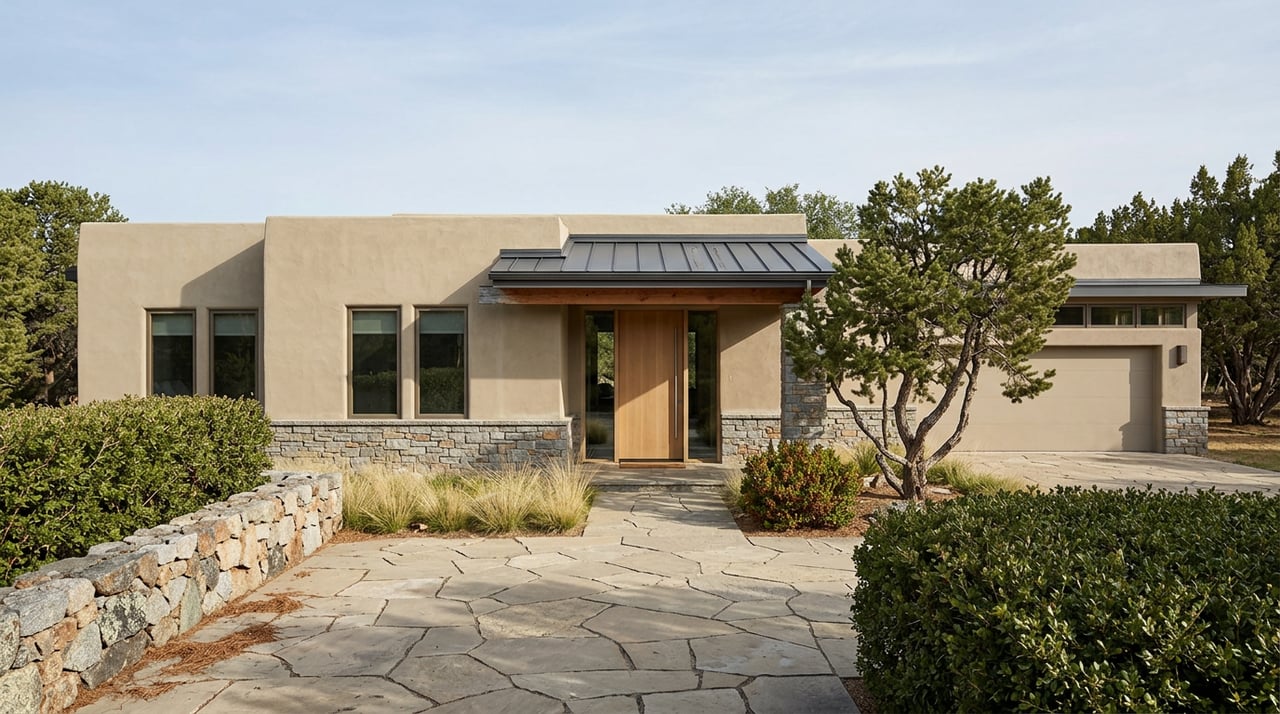
A buyer touring the Quad Cities area last month pulled up two listings side by side. A four-bedroom on Prescott's east side, $615,000. A nearly identical floor plan in Prescott Valley, twelve minutes away, $459,000. Same builder-grade finishes, comparable lot size, similar drive time to downtown. The buyer asked the question every agent in this market eventually has to answer: what is the extra $150,000 actually buying?
The honest answer isn't school ratings or granite counters. It's water, and specifically, which government entity has legally promised that water will still be flowing a century from now.
What "Assured" Actually Means
Arizona's 1980 Groundwater Management Act created eight Active Management Areas, including the Prescott Active Management Area, to slow groundwater depletion in the state's fastest-growing basins. Prescott Water reports that in 1998, regulators determined the Prescott AMA was pumping more groundwater than the aquifer could naturally replace, and, according to the City of Prescott, by 1999 that triggered the Assured Water Supply rules that still govern development here. Under those rules, new subdivisions have water-supply requirements before they can be platted and sold.
The City of Prescott has held a 100-year Designation of Assured Water Supply, most recently updated through a Decision and Order signed on December 30, 2009. It's also the reason older subdivisions with plats approved before August 21, 1998 were grandfathered onto groundwater use that newer ones can't touch.
That much is straightforward. The complication starts with what counts as "available."
The Water Prescott Already Counts, But Can't Yet Use
Prescott Pulse reported that in 2004, the City of Prescott and the Town of Prescott Valley jointly bought roughly 6,000 acres north of town known as the Big Chino Water Ranch, with Prescott holding a 54.1 percent share and Prescott Valley 45.9 percent. Prescott Pulse reports that state law authorizes the two municipalities to import up to about 8,068 acre-feet of groundwater a year from that site into the Prescott AMA.
Here's the part that doesn't show up on a listing sheet: none of that water is currently reaching a tap. Prescott Pulse's reporting notes that moving it would require roughly 30 miles of pipeline, new production wells, and a pump station, infrastructure that has never been built. A 2024 cost update put the project at $261.5 million, with Prescott's share alone estimated near $141.5 million. There has been no significant pumping from Big Chino since 2004, and current activity on the ranch is limited to grassland rehabilitation work done in partnership with the Nature Conservancy.
A designation of assured water supply is a legal accounting exercise, not a plumbing diagram. The Little Chino aquifer, Watson Lake, Willow Lake, and reclaimed effluent are doing the actual work today. The Big Chino pipeline remains unbuilt, and the city has spent since 2021 answering deficiency letters from the Arizona Department of Water Resources, five of them as of early 2026, as it tries to modify that 2009 designation.
Same Basin, Different Aquifer, Different Paperwork
Prescott Valley isn't drawing from the same source. The town pumps predominantly from the Upper Agua Fria aquifer, not the Little Chino aquifer that supplies Prescott, and it recharges water back into that same Agua Fria system. Under the town's own code, Ordinance 2023-930, new residential development has to secure a written commitment of water service from a provider holding a Designation of Assured Water Supply before a building permit is issued. That's a project-by-project documentation requirement rather than a blanket citywide designation the way Prescott has structured it.
According to Prescott Pulse's reporting on the city's February 2026 council briefing, Prescott is currently the only municipal water provider in the Prescott AMA holding that full 100-year designation in its own name. Chino Valley and Dewey-Humboldt, the other two incorporated towns in the AMA, operate under their own arrangements with different providers and different histories. None of this means Prescott Valley or Chino Valley residents are at risk of losing water service. It means the legal footing under each municipality looks different, and that difference has been priced into the market for longer than most buyers realize.
Past the City Limits, There's No Guarantee At All
Move outside any incorporated area and the picture changes again. Properties on private wells in unincorporated Yavapai County, including parts of the Williamson Valley corridor near Talking Rock Ranch and rural land east of Prescott Valley, draw from the same stressed groundwater basin as the municipal systems. A buyer looking at acreage out here is weighing a well, a permit, and whatever the seller can document about depth and yield.
This is exactly the kind of detail worth raising with a lender or title company before writing an offer, not after. Water source doesn't just affect long-term supply confidence, it affects how insurers and some lenders evaluate rural properties differently from ones inside a municipal service area.
What the Numbers Actually Show
None of this shows up as a line item on a listing, but it shows up in the price data. Over the three months ending in August 2026, homes in Prescott sold for a median of $610,000, up 1.3 percent from the same period the year before, at roughly $323 per square foot. Over the three months ending in June 2026, Prescott Valley's median sale price was $452,000, essentially flat year over year, at about $283 per square foot.
| Market | Recent median sale price | Price per square foot | Primary water source |
|---|---|---|---|
| City of Prescott | ~$610,000 (3 months ending Aug 2026) | ~$323 | Little Chino aquifer, Watson/Willow Lake, city-held 100-year DAWS |
| Prescott Valley | ~$452,000 (3 months ending Jun 2026) | ~$283 | Upper Agua Fria aquifer, per-project water commitment required |
| Unincorporated Yavapai County (Williamson Valley corridor, rural areas) | Varies by parcel | Varies | Private wells |
Square footage and finish level explain some of that spread. Prescott's downtown proximity and established neighborhoods explain more of it. But a market that has spent the last several years watching Arizona water headlines tends to price legal certainty even when nobody can point to the specific dollar figure it adds. Buyers comparing these two markets purely on square footage are missing part of what they're actually negotiating over.
What This Means If You're Comparing These Markets
Before comparing a Prescott listing to one in Prescott Valley, Chino Valley, or unincorporated Yavapai County, it's worth asking a few direct questions:
- Which entity provides water to this specific address, and does that entity hold a Designation of Assured Water Supply from ADWR?
- If the property is on a private well, what does the well log show for depth and historical yield, and how does that compare to nearby wells in the same corridor?
- If this is new construction, has the builder documented a written commitment of water service, or is that still pending?
- Is any part of the water supply behind this designation counted as legally available but not yet physically connected, the way Big Chino is for Prescott?
None of these questions should change whether someone chooses Prescott over Prescott Valley or the reverse. Both markets function, both have stable municipal water systems today, and neither is facing an imminent shortage. What changes is whether a buyer understands what they're actually comparing when they see two nearly identical homes with a six-figure gap between them.
Frequently Asked Questions
Does every home in the City of Prescott automatically have the 100-year water guarantee? Homes served by the city's municipal water system fall under its Designation of Assured Water Supply. Properties on private wells within city limits, where they exist, are a separate situation and should be verified individually.
Is Prescott Valley's water supply less secure than Prescott's? Not necessarily less secure, just structured differently. Prescott Valley draws from the Upper Agua Fria aquifer rather than Prescott's Little Chino source, and its ordinance requires each new development to independently document a water service commitment rather than relying on one citywide designation.
Should this affect financing on a rural Yavapai County property? It's a reasonable question to raise with a lender early. Some lenders evaluate well-served rural properties differently than ones inside a municipal water service area, and getting that documentation together before an offer avoids delays later in escrow.
Water policy in this region will keep evolving. The city's long-term water management plan is on track for a council-approved final version by December 2026, and the Big Chino pipeline question isn't going away. For now, the safest approach is the same one that applies to any Prescott-area purchase: know exactly what's behind the tap before comparing what's on the price tag.
If you're weighing a move between Prescott, Prescott Valley, or the surrounding county and want the water picture spelled out for a specific address, the Desert Luxe Team can walk through the disclosure documents and service history before you write an offer. Experience luxury service at every price. Contact Desert Luxe today.
This article is general information, not legal, tax or financial advice. Consult a qualified professional about your situation.