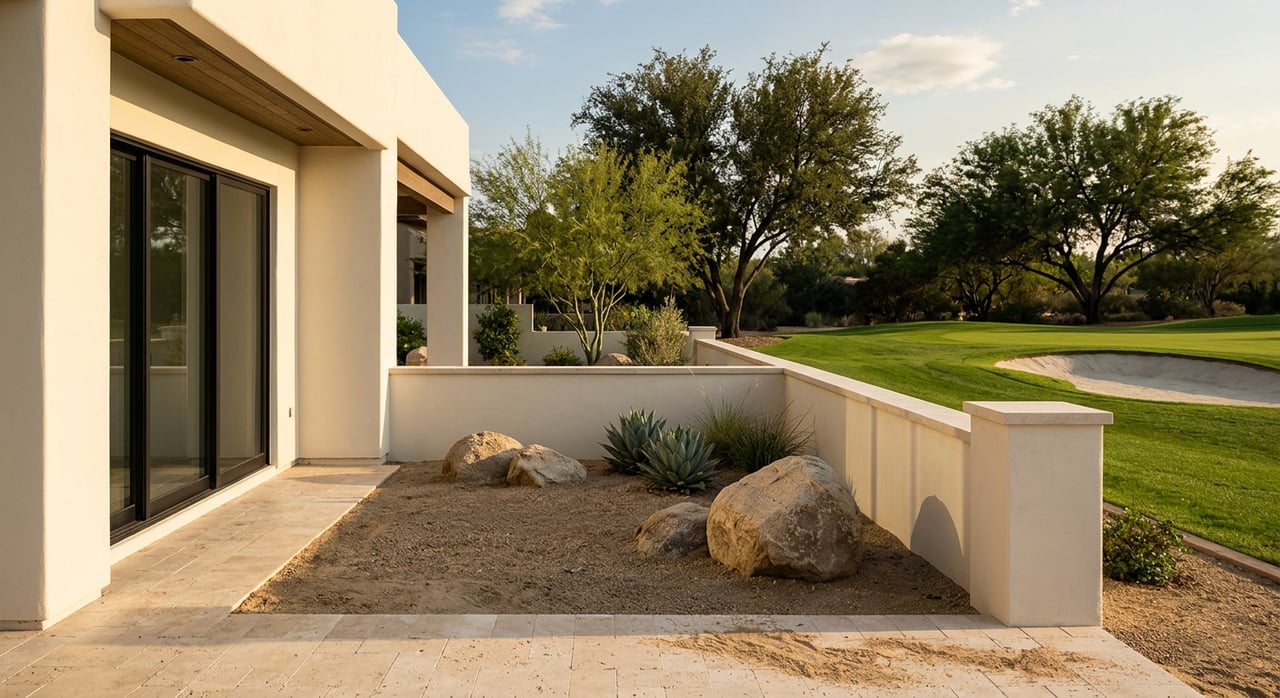
Picture your morning coffee with fairway views and sunset rounds a few steps from your patio. If you are eyeing a Scottsdale address for the golf lifestyle, you are in good company. Demand surges in winter and choices range from relaxed semi‑private clubs to ultra‑exclusive enclaves. In this guide, you will learn how community types, memberships, timing, and due diligence shape your purchase and day‑to‑day experience. Let’s dive in.
Scottsdale golf lifestyle at a glance
Scottsdale sits inside Greater Phoenix and has a strong luxury segment with a big seasonal draw. Market snapshots vary by source, but recent reporting places the median home price near the high six to low seven figures, so it pays to plan your budget early. The prime golf and resort season runs roughly October through April, with the busiest months in January to March. During those months you can expect fuller tee sheets and more competition for both homes and club access, which aligns with this month‑by‑month Arizona golf travel breakdown.
Community types and access
When buyers say “golf community” in Scottsdale, they usually mean one of four setups. Each has different access rules, costs, and member influence over club decisions.
- Private, member‑owned clubs inside gated villages. These feel intimate and homeowner‑driven. Examples include enclaves with tight membership caps and strong governance.
- Large resort‑style master‑planned communities with private club options. Places like Desert Mountain and Desert Highlands offer multiple courses, dining, fitness, and social programming. Explore an overview of Scottsdale golf communities from Desert Mountain to get a sense of scale and amenities.
- Semi‑private or developer‑run clubs adjacent to neighborhoods. These may sell memberships to non‑residents or allow some public play, which can ease access but reduce exclusivity.
- Ultra‑exclusive, invitation‑only clubs. These have very limited memberships, high initiation fees, and strict approval processes.
Why this matters to you: the model affects your tee time access, your voice in club decisions, and your long‑term costs. Homeowner control and refund rights are usually strongest in member‑owned clubs and weakest in proprietary clubs.
Membership models and costs
Understanding equity versus non‑equity is key before you shop.
- Equity clubs: You buy a membership interest and typically gain voting rights. Initiation fees can include a refundable portion, and members may share in special assessments for capital projects.
- Non‑equity or proprietary clubs: A company or developer owns the club. You purchase a right to use the facilities under a membership agreement. Terms and dues can change at the owner’s discretion, and initiation fees are often non‑refundable.
Costs vary widely in Scottsdale. Industry guides show initiation fees ranging from the low tens of thousands to several hundred thousand dollars, with ultra‑exclusive tiers in the mid six figures and monthly dues that can reach $2,500 or more. Use these as directional signals and confirm with the club. For a helpful overview of Arizona club categories, fees, food and beverage minimums, and hidden costs like capital assessments, review this Arizona golf club membership guide and this private club cost comparison.
Key membership questions to ask up front:
- Is membership mandatory for homeowners, and if so, which tier?
- What are the initiation fees, monthly dues, and food and beverage minimums for each category?
- Are there caps or waitlists that limit peak‑season play? What is the booking priority?
- Does membership convey with the home, and are transfer fees or board approvals required?
Timing your purchase
Scottsdale’s busiest golf months are January to March, with strong activity October to April. You will see more buyer competition and tighter club access then. If you want to experience realistic crowd levels, tour homes and test club access during peak months. If you want negotiating room and easier scheduling, consider late spring or early fall. For context on tee time demand and seasonality, see this month‑by‑month guide to Arizona golf travel.
Golf‑front value, privacy, and risk
Homes on the course often command a premium, but the exact number depends on the course, hole position, and view. Academic research shows common premiums in the single‑digit to low‑teens percent range, with some developments seeing 15 to 25 percent or more for standout lots. The right way to price a specific lot is by local comps. For background on how golf proximity influences prices, see this empirical study on golf courses and house prices.
Privacy and nuisance vary by location on the hole. Tee boxes and greens can bring more noise and visibility than mid‑fairway locations. Topography, landscaping, and cart‑path placement help buffer sightlines. Ball strikes are a practical concern on some lines of play. Many homeowners’ policies may cover accidental damage from golf balls, but coverage terms and deductibles vary, so confirm with your insurer. For a quick primer, review how policies treat golf ball damage to homes.
Course condition and club health also matter. A well‑maintained course supports property values, while deferred maintenance or club distress can weigh on nearby prices. In documented cases, closures or severe deterioration have produced notable value declines. Learn more about the impacts of failing clubs on nearby values.
Due diligence checklist for buyers
Use this list to protect your budget and lifestyle goals.
Legal and HOA documents in Arizona:
- Order the HOA resale disclosure packet early. Arizona law requires planned communities to provide declarations, bylaws, rules, current budgets, recent financials, and the latest reserve study if available. Review assessments, reserves, litigation, and any course‑related easements or restrictions. See the state’s resale disclosure statute.
- If you plan to rent seasonally or short term, confirm city and HOA rules plus state registration and licensing requirements. Arizona outlines owner registration for rentals here: residential rental property law.
Club and financial checks:
- Request recent club financial statements, reserve plans, dues history, and any capital assessment schedules. Member‑owned clubs usually disclose more, but you should ask either way.
- Confirm membership transfer rules, refund policies, and waitlist details before writing an offer.
Physical and site considerations:
- Verify lot lines, any cart‑path or maintenance easements, and setback limits for fences or walls. Review recorded plats and CC&Rs.
- Ask about past golf‑ball damage and repairs. Consider impact‑resistant glass if your exposure is high. For context, see this overview of golf course home insurance considerations.
- Inspect drainage and irrigation influences on the yard and pool. Request any recent drainage studies if the area has had runoff issues.
Market and resale:
- Ask your agent for comps that isolate golf‑front premiums versus interior lots in the same micro‑market.
- Check whether recent sales were affected by club news or assessments. Litigation must be disclosed in the HOA resale packet.
Red flags to investigate fast:
- Low reserves, frequent special assessments, or sudden dues jumps at the club.
- Evidence the course is for sale, under foreclosure, or in active litigation. Learn more about how club failures impact nearby homes.
- Mandatory memberships with nontransferable terms you cannot accept.
- Visible course deterioration or limited staffing during peak season.
Smart buying with Desert Luxe Team
You deserve a smooth, hospitality‑level experience from search to closing. Our team brings a systems‑driven approach to Scottsdale golf homes, from clarifying membership structures to coordinating vendor inspections and parsing HOA and club disclosures. We will help you compare local comps for golf‑front versus interior lots, confirm seasonal access realities, and align your offer with the right contingencies.
As a boutique team backed by a respected regional brokerage, we pair white‑glove care with real market reach. You get professional photography, MLS syndication, and a consistent process that keeps you informed at every step. If you want a fairway lifestyle with confidence, we are ready to guide you.
Ready to start? Connect with the Desert Luxe Team for a tailored plan and on‑the‑ground expertise.
FAQs
What should I know about Scottsdale golf club memberships before I buy?
- Confirm if membership is mandatory, what tiers exist, all fees and minimums, and whether transfer or board approval is required. Use guides on Arizona club structures and fees to frame your questions, such as this Arizona membership overview.
When is the best season to shop for a Scottsdale golf home?
- Peak golf season runs October to April, with January to March the busiest. Expect more competition then and consider touring both peak and shoulder seasons. See this month‑by‑month guide for context.
How much more do golf‑front homes cost in Scottsdale?
- Premiums vary by course quality and lot position. Academic research shows common premiums in the single‑digit to low‑teens percent range, with some cases higher. Local comps are the best way to price a specific lot. See this study on golf proximity and prices.
Does homeowners insurance cover damage from golf balls?
- Many policies may cover accidental damage from errant shots, subject to deductibles and policy terms. Confirm specifics with your insurer. For a primer, review how policies treat golf ball damage.
What is in the Arizona HOA resale packet and why does it matter?
- The packet includes CC&Rs, bylaws, rules, budgets, recent financials, and the latest reserve study if any, plus a statement of assessments. It is your primary source for costs, rules, easements, and litigation. Read the statute here: Arizona resale disclosure requirements.